Mythos Update #4: Final Touches

Well, horror fans, this is it. The last Mythos development update.

After a nearly four month long development cycle, the game is finally nearing completion. Pending some last bits of polish here and there, and another short round of testing, release day is in sight.

What a journey Mythos has been for me. It began as a short one month project intended for Degica’s NaGaDeMo contest, but it’s grown into something so much more, and I’m genuinely proud of what I ended up putting together. After the burn out from Legionwood 2, I thought it would be at least a year or two before I got stuck into another fully-fledged commercial project (and hey, there is my second novel, which still needs to be finished) so I would never have expected Mythos to evolve into what it is today. What started with one small addition soon turned into ten small additions, then a total revamp, and before I knew it, I was withdrawing from the contest to expand my side project into a “proper” game worthy of a commercial release.

MythosOtherworldToday, I finalised the final Otherworld area in the game, and wrapped up two endings — additions that were conceived during last month’s beta testing cycle, when I decided to delay the game to bring more Legionwood 2 elements (namely, the ability for the player’s dialogue choices to result in actual consequences later) into the mix. The number of different ways the beta testers found to complete the game truly astounded me. You can play Mythos as a normal RPG, training up to defeat every enemy; or you can play it as an adventure game, focus on non-combat skills and never have to fight a single battle. After seeing how non-linear the game really could be, I felt like it would be stupid not to expand that element of the game into something worthwhile.

My plan at the moment is to release the game on September 30 at the Dark Gaia Studios website. Steam and Desura releases are also in the works, though as with Legionwood 2, may be a few more weeks down the track.

I’d also like to take this chance to mention the IndieGoGo campaign I ran for One Night 4 way back in 2012. Although the funding goal was never reached, the proceeds of that campaign did eventually allow development on Mythos to begin. Hence, if you were one of the backers of that campaign, please feel free to contact me and you’ll be able to receive a free copy.

Last but not least, I’ll be running a sale on release day to allow people to get Mythos at a discount. I’ll be making another update before then though, I’m sure.

Posted in Uncategorized | Tagged , , , | Leave a comment

The Walking Dead Game: Season Two [Review]

So, as any zombie aficionado should know, the final episode of Telltale Games’ The Walking Dead: Season Two came out earlier this week. Way back in 2012, I positively reviewed the previous season and its 400 Days DLC, so you can probably guess I was pretty excited when Season Two was announced. I originally planned to review it as soon as I was done playing the first episode, All That Remains — an entry that left me a little disappointed due to how much of a departure it seemed to be from the masterpiece that was Season One. Instead, I decided to hold off until the season was complete, to make sure I didn’t do it an injustice with a pre-mature negative review. “This is The Walking Dead“, I told myself. “It’s probably just a slow start. It’ll pick up. It’ll be as good as Season One.”

How very wrong I was. Now that the final episode is done and dusted, I can come out and say it: The Walking Dead: Season Two is not a worthy successor to the masterpiece that came before it. It’s barely a successor at all. Hell, it’s barely even a good game. While it’s a good addition to the Walking Dead universe, most of the charm that made Season One so memorable has sadly been stripped away.

The Walking Dead: Season Two is a direct sequel to the previous game. With Lee Everett out of the picture, players now find themselves controlling Clementine, whose story picks up 2 years after the emotional ending to Season One. The basic setup is almost exactly the same as the previous game (or any Walking Dead media, for that matter): Clementine is alone and desperate in the zombie apocalypse and must appeal to a group of fellow survivors to stay alive. The problem is that this time around, Clementine’s journey has been made far more linear and cinematic — the story is always pushing forward, no matter whether the player is ready for it, which unfortunately means you don’t have much of a chance to just take a breather and get to know the game’s characters or reflect on what’s happened so far.

Characters often appear simply to die in an "emotionally-stirring" scene a few hours later.

Characters often appear simply to die in an “emotionally-stirring” scene a few hours later.

The characters themselves aren’t much of a replacement for Season One‘s memorable cast. As mentioned before, the story is much more linear, so the hub based areas of the first game where you could just walk around and talk to other survivors have been removed. This means that most of the conversations in the game occur at scripted points only, which makes the characterisation feel a little more forced. While there are some standout characters (such as everybody’s favourite, Luke), most of the characters don’t feel as fleshed out as anyone from the previous game. Worse, they often get killed off or leave the group before the player really gets a chance to get to know them, which removes the emotional impact of the first game and makes the death scenes meaningless.

The main thing wrong with The Walking Dead: Season Two, when compared to the previous game, is that it just feels a lot more rushed and unfinished. While for the most part the gameplay is pretty much the same as in Season One (walk around, collect clues, solve puzzles, do quick-time events to pass action scenes etc.) it seems to have been watered down. Outside of the action scenes, there isn’t much of a “game” to speak of: the occasional puzzles that were scattered throughout the previous episodes are gone, along with the hub based item collecting. Objects you collect rarely have any relevance to the gameplay (most often, they’re used automatically during cutscenes) and — perhaps worst of all — your choices don’t really have any impact on the game. In Season One, your choices had far-reaching consequences. In Season Two, your choices determine whether a character dies at the start of an episode, or if they die half an hour later.

The only redeeming element of The Walking Dead: Season Two is its story, and if you’ve come to this game expecting nothing more than a bleak, desperate look into the Walking Dead universe, you’ll find at least that much. The story in Season Two is pretty good, filled with shades of morality and a genuine sense of dread. You’ll encounter bestial, psychotic killers and plenty of death and misery. There are a lot of memorable moments in Season Two‘s story, but thanks to the more linear structure of the game it doesn’t quite flow as well as Season One. The main antagonist of the season is dead by the end of the third episode, leaving the fourth episode and most of the fifth without any obvious conflict or logical goal. Nevertheless, it’s still an effective portrayal of just how hopeless the Walking Dead world is, and the depths people will descend to in order to survive.

So, the question you probably want to ask is “is The Walking Dead: Season Two worth my time?” Well, it depends. It’s not a bad entry into the series, not by any means. Compared to many other zombie games, Season Two is still an emotional, thought provoking experience. Its just not as good as the previous game and fails to capture most of the things that made the original season great. If all you’re looking for is a simple continuation of The Walking Dead, and you’re not bothered about your choices ultimately meaning nothing, then it’s still worth checking out. I just hope that Telltale Games returns to their roots for the third season that will no doubt be announced soon.

Posted in Games | Tagged , , , , , | Leave a comment

Mythos Update #3: Beta Testing

It’s beta testing time! That’s right folks, Mythos: The Beginning is now basically complete and all that remains before release is to test it. The number of people who volunteered to be beta testers is simply amazing: when I put the call out, I received applications from 33 different people, all asking to be added to the list. Who would have known an RPG based on cheesy old horror movies would (apparently) be so popular?

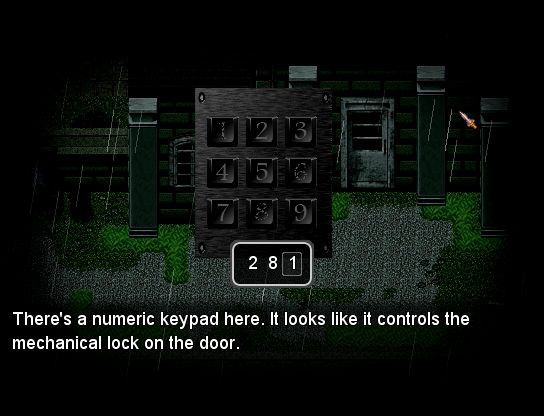
Harborough Asylum contains many puzzles to solve.

Harborough Asylum contains many puzzles to solve.

Unfortunately, I wasn’t prepared for such interest so I had to cut down the pool of beta testers to 10 people. I tend to find that it is much easier to keep track of things with a smaller group of testers (plus, I don’t actually have 33 beta keys to hand out, and it takes a few days to set up more), so I have randomly selected 10 names from the list and have sent out keys to the lucky recipients. If you were on the list and you didn’t get one, please accept my apologies. I totally didn’t expect so many people wanting to test Mythos, but I thank you for your support.

So, with the beta builds sent out and testing underway, the last thing to do is to decide upon a release date. At this point, I’m still a bit hesitant to give Mythos an exact date (and those of you who’ve followed me for a while will know I usually fail at meeting them) but I would love to have the game released by the end of August. I’ve set aside three weeks for beta testing and a couple of additional days to fix any last bugs (depending on how many are reported), but it’s completely feasible at this point that Mythos will be available on my website by mid-September, with Steam and Desura versions to follow a little later.

Ultimately, you should know that Mythos is coming very soon. Like a creature of the night, it is ever so slowly coming for you. It won’t be long now.

Posted in Games | Tagged , , , | Leave a comment

Mythos Update #2: Length and Progression

It’s time for the second Mythos: The Beginning update!

As of this week, I’ve reached two important milestones in Mythos: The Beginning‘s development. Firstly, last Monday marks one month since beginning work on the game for the Indie Game Making Contest. Secondly, at the time of writing, Mythos has finally reached 50% completion. Depending on how you look at things, this may seem like a marathon feat of endurance — I’ve only been working on the game for a month, and it’s already literally halfway done.

But here’s where we reach a slight problem: the “half” of the game that I have done so far only amounts to just over three hours of gameplay. Assuming the second half is just as long, we’re looking at a final playtime of around six hours. That’s pretty short for an RPG, but it’s higher than average for a survival horror game. By making a game that attempts to be both a traditional C-RPG and an old-school survival horror game, I’m running a considerable risk of alienating certain players. RPG fans will think the game is far too short, while survival horror fans will likely find it far too long (for reference, Resident Evil 2 can be completed within 2 hours).

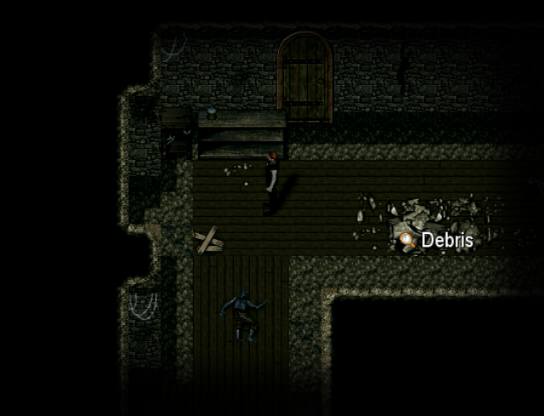
Each area in Mythos has its own brand of terror.

Each area in Mythos has its own brand of terror.

So, what exactly is going to be in Mythos? For the most part, Mythos is structured in much the same way as my earlier One Night games — the objective of the game is to explore an abandoned building, gradually unlocking new areas and rooms over the course of the game until you’ve gathered the necessary items to defeat the final boss. In Mythos, this exploration is divided up into five main “stages”: the children’s ward, the main building, the catacombs, the upper floors and the Old Ones’ world. In typical RPG fashion, each new “stage” contains harder monsters and puzzles. For the most part, these areas are visited sequentially, but as Mythos is a survival horror game, they also contain key items and puzzle elements that prompt backtracking to a previous area.

That all sounds quite typical for a survival horror game but, as pointed out before, it’s pretty simplistic as far as RPGs go. There is a way to address it, though: re-playability. So far, the direction in which Mythos is going greatly encourages making each playthrough of the game different. Unlike in a normal survival horror game, Mythos has three different character classes, four non-combat skills and over 25+ combat abilities — that’s quite a lot of ways to build your character.

Rather than artificially padding out the game to make it a longer RPG, what I intend to do is emphasise the existing RPG elements and make each character experience the game in a different way. As you can already see in the demo, the order in which you progress through a given area can change depending on your character’s abilities. Characters with Subterfuge can unlock certain doors without needing the key. Characters with Persuade can convince NPCs to help them out and make parts of the game considerably easier. Characters with high Intelligence can bypass puzzles entirely. My goal in Mythos is to allow for each character to have different ways to progress in the game.

So, while the game may not turn out to have an epic final playtime, it’s designed so that you probably won’t see everything in one playthrough. Didn’t master your Occult Lore skill? You’ll miss out on some extra story details. Don’t have the final level of Subterfuge? You’ll miss out on an item that subtly changes the ending. Each character’s exploration of Harborough Asylum will be unique to them — that’s what “role playing” is supposed to be.

Posted in Games | Tagged , , , | Leave a comment

Mythos Update #1: Difficulty Settings

Well, it’s been about a week since the public demo of Mythos: The Beginning went online, and in that time I’ve received from pretty good feedback on which direction the game should take.

A hot topic that’s been brought up a few times (and something that seems to be an issue with games I make in general) is the game’s difficulty — namely, that the fights are pretty damn hard. As such, I’m currently taking the time to go through what I’ve made of Mythos so far with an eye to re balancing the combat difficulty and making the Easy Mode toggle actually affect the stats of enemies.

Easy Mode will tone down the game's survival elements.

Easy Mode will tone down the game’s survival elements.

First of all, I should point out that, just like in the Legionwood series, the unforgiving difficulty of Mythos is a conscious design choice, for several reasons. Mythos is unique among my games in that it’s both an RPG — one that’s inspired by old-school tabletop games, at that — and a survival horror game. I believe that in a horror game, the enemies should be a threat. Players should be scared of them. If they’re lucky and play smart, they might be able to kill a few, but they should definitely end up dead if they try to take on all the enemies head on. Furthermore, the combat, being based on tabletop RPGs, is resolved through dice rolls, leaving a lot to chance and making unlucky deaths rather common. My goal with the combat in Mythos is to make it fast and ferocious, giving the player a sense that they’re underpowered.

However, with the feedback received from the demo in mind, I’ve actually come to realise that many people who’ve played the game so far don’t actually have a lot of prior experience with survival horror games. Because Mythos is an RPG and not just a horror adventure game, a large portion of its players are RPG fans that haven’t played a survival horror game before. For these people, it’s quite a shock that any random enemy in Mythos can destroy the player character relatively easily.

So, how will I deal with this problem? It’s simple. Mythos currently has an Easy Mode that can be toggled from the Config menu. At the moment, this only affects the cost of EXP upgrades and makes health items more common, but I’m going to spend a significant amount of time expanding it to affect combat, as well. There will be two sets of enemies in Mythos — one for each difficulty mode — and Easy Mode will make the monsters a lot less ferocious.

The idea is that, with Easy Mode on, the game will shift focus a little. Instead of being a survival horror game with RPG elements, it will become more of a straight-forward RPG. It will be possible to fight all of the enemies and grow steadily more powerful, just like in a normal RPG. In that sense, “Easy Mode” is probably a misnomer. Mythos isn’t just about combat, and the game will still be a challenge, even if the monsters are a pushover. It’ll just become a… different game, in a sense.

Hopefully this will enable players of all skill levels to enjoy Mythos. We’ll have to wait and see.

###

Not a gaming fan? Don’t worry — I’m still working on my next novel. You can check out a preview here.

Posted in Games | Tagged , , , | Leave a comment

NaGaDeMo Conundrums…

Hot on the heels of the last update, I’ve been working on NaGaDeMo contest entry and I’m having a bit of a dilemma: what exactly do I want to do with this game? If I continued working on the game as it is now, I could have it finished and ready for the submission deadline with no problems. However, after tweaking the ending cutscene a little today, I realised that Mythos: The Beginning could be so much more than it is right now. What I’ve done so far is, in my opinion, a pretty decent effort with a chance of winning, but I can’t help feeling that by cutting out so much to release the game by the contest deadline, I’m not doing my original concept justice.

14247180649_1b94e73c29_oThe fact is, Mythos doesn’t want to be a contest entry. It was meant to be an hour long, and it’s ballooned out to 3 hours. Even with that length, there are still two main areas that I’ve had to cut out to release Mythos by June 30. Two main areas… considering the game as it is contains four main areas, that’s a chunk almost equivalent to half the game. It’s another 1-2 hours of gameplay, at the least, not to mention the missing story elements and pacing that those areas would have provided. There are also skills, puzzles and additional gameplay elements that I originally intended to include but just couldn’t because of time restraints. And I really would have liked to have them in the game.

I guess what I’m trying to say is that I’m figuring out what to do with Mythos. I didn’t really intend for this to become a “proper” project, but after spending so much time and effort on it, it’s eventually morphed into one. So, what do I do? Should I continue to work on the game as it is now, with large parts cut out, in order to release it in time for the contest? Or should I gracefully withdraw, take my time working on the game implementing all of the planned content, give it a proper commercial release and make it a title worthy of being my “final game”?

That’s the question.

Posted in Games | Tagged , , , | Leave a comment

Indie Game Making Contest 2014

Degica, the publisher of RPG Maker, are holding a game making contest to celebrate National Game Development Month. The rules are deceptively simple: spend a month making an hour long game in any genre — the winner gets a cosy $10,000. Last week, I said I wanted to take a break from game development, but then I stumbled upon Degica’s announcement thread on the RPG Maker forums quite by accident and I thought to myself: “a game in a month? Hell, even I can do that!”

In between bursts of working on Blood Lake, I’ve slowly been putting together a contest entry. Here’s what I’ve noticed: working on a short game in specific time frame is fun. I’m actually enjoying working towards a deadline and I’m loving that I can spend time just polishing the game without having to pad out the gameplay or story first. Sure, it’s only an hour long game, but it’s probably going to be my last one, so there’s no reason not to pull out all the stops, right?

14366968774_4a9eb72864_o

Mythos: The Beginning is a survival horror/adventure role playing game. Set in London in 1924, Mythos tasks you with creating your own paranormal investigator from scratch and guiding them through a frightening exploration of the infamous Harborough Asylum. Three young university students have vanished while attempting to conduct a scientific survey of this dreaded place, and it’s up to you to find them! Throughout the night you’ll discover that Harborough Asylum’s reputation is more than an urban legend, and you’ll have to fight for your life against otherworldly Lovecraftian foes.

You can check out some early screenshots here.

Posted in Games | Tagged , , , | Leave a comment

Pretty Birds [Short Story]

Get ready, folks. It’s been quite a while since I’ve posted any of my writing on this blog, and this particular story’s not for the faint of heart. This is Pretty Birds, a semi-literary horror/crime story that I completed as a final year university creative writing assignment. It later got published in the 2014 edition of a Melbourne based anthology called [Untitled] and was depicted in the cover artwork. As of April 1st, the rights I sold to [Untitled] have lapsed back to me and, with that happy news, it’s time to grant this story its well-deserved place on the blog alongside everything else I’ve written.

First, some background:

Pretty Birds is pretty much the only significant piece of writing I did in 2013 aside from working on my second novel and, given that it was a university assignment, it’s probably the most outwardly literary, symbolic thing I’ve written. Oddly enough, it’s the only thing I’ve ever written that followed a plan and went through more than three drafts. Due to its sensitive subject matter (it’s attempting to depict the stereotypical horror movie serial killer in a serious, sympathetic manner) it proved more difficult to write than the straight genre fiction I usually occupy myself with. First and foremost, though, it’s still a horror story, and — just like much of my other writing — it’s main purpose is to shock and disturb you.

When I wrote Pretty Birds, I was trying to prove to my university lecturer that horror can be subtle and literary, and doesn’t always have to be about gore. The “horror” in this story is designed to be of the “slow burn” variety, only dawning upon the reader at the very end. It’s not a style I usually play with, but I think in this case it worked out well.

###

Download the PDF of Pretty Birds here.


Posted in Writing | Tagged , , , | 1 Comment

Cell by Stephen King [Review]

So, this review has been a long time coming. Anyone who reads this blog regularly knows that if there’s two things I love the most in the realm of horror, those things are Stephen King and zombies. With that in mind, it’s actually pretty surprising that Stephen King’s 2006 novel Cell evaded my attention for so long. Cell is Stephen King’s love letter to the zombie apocalypse genre, filled with homages to zombie classics like Dawn of the Dead and all the prototypical tropes of the modern zombie story. Just that premise alone is enough to make Cell an essential read for anyone who has a soft spot for Stephen King and the undead, but what really makes Cell stand out is that it introduces some horrifying new twists to the zombie genre — things I’ve yet to see in any other zombie novel.

Cell is the story of Clayton Riddell, an aspiring graphic novellist, who finds himself struggling to survive after a cell-phone signal known as “The Pulse” suddenly converts most of the population into mindless “phone crazies”, who savagely attack anyone around them. After just barely living through the initial onslaught, Clayton falls in with a group of fellow survivors and begins the perilous journey from Boston to Maine to re-unite with his estranged family. Along the way, the “phone crazies” rapidly increase their numbers, and slowly begin to evolve into a much more frightening enemy, smarter and stronger than any garden variety zombie.

Cell_by_Stephen_KingIt’s the characters and their struggle for survival that makes Cell such an excellent read. Unlike something like The Walking Dead, there aren’t a whole lot of protagonists in Cell (the main group has only three members for the majority of the book), but in typical King fashion, they’re all extremely well written. Since there isn’t a large cast of characters, King takes the opportunity to really flesh the three main protagonists out, and I found myself becoming attached to the group relatively quickly. While a typical zombie story likes to play up the conflicts between the survivors, the protagonists in Cell go out of their way to work together and form a tight, closely-knit team, which makes the horrific situations they endure so much more tense. It’s nice to see people in a zombie apocalypse helping each other for a change — in fact, this makes the shock even worse when one of them suddenly bites the dust.

Part of the reason why I found the story so compelling is that Cell really portrays the horror of the zombie apocalypse. In most other zombie stories, the focus usually turns to humans as the main enemy, as the protagonists learn to deal with the zombies, and the zombies soon stop being scary. Stephen King makes sure this doesn’t happen in Cell. Sure, the “phone crazies” start off as pretty stereotypical zombies, and Clayton and his companions quickly get to work figuring out the “rules” of the zombie apocalypse. Then, just as the initial horror wears off, s–t really hits the fan. Throughout the novel, the “phone crazies” rapidly evolve new abilities until they become something completely alien. King’s zombies are fresh and unique, and make the genre scary again.

In terms of writing, Cell is typical contemporary Stephen King. The language is very descriptive and filled with all of King’s ordinary nuances. The dialogue is realistic and flows well. One good thing about Cell is that (at least by Stephen King’s standards) it’s a rather short novel, and is fast paced and exciting the entire way, unlike some of the thicker Stephen King books. This isn’t to say King is a bad writer — his writing is the gold standard of horror — but he does have a tendency to draw out his stories unneccesarily. This would have really hurt Cell‘s pacing, and I’m kind of glad that Cell isn’t quite as long as King’s other apocalyptic novel, The Stand.

So, long story short: I really enjoyed Cell. As a zombie fan (and as a Stephen King fan) it hit all the right notes for me. Unfortunately, it’s pretty under-appreciated as far as Stephen King books go. My local bookstore has about ten copies of Carrie and The Shining, but the only place I found Cell was on Amazon. As such, it can be a pretty expensive book, but it’s still one of the best pieces of zombie fiction I’ve ever read. If you’re looking for a book that reinvigorates the zombie apocalypse genre, you need to check it out.

Posted in Uncategorized | Tagged , , , , | Leave a comment

Release day for Legionwood 2!

11904013606_ab721781e7_o

The day everyone a small group of hardcore fans has been waiting for is here: after almost four years of development, the full version of Legionwood 2 has finally been released. As of this very moment, the game is available to purchase from the Dark Gaia Studios website in all of its indie, SNES-style Role Playing Game glory.

As I’ve posted before, the game retails for $5.99 USD (even though I live in Australia it’s so much easier to handle online payments in American dollars) and you can pay for your copy via Paypal, credit card or wire transfer – it’s all handled securely through the game’s distributor. All purchased copies of Legionwood 2 are completely DRM-free and can be backed up on an external drive or transferred to other PCs with ease.

I’m also working on getting the game available through Desura and its associated portals. The Desura edition of Legionwood 2 is currently being evaluated and should be online within the next two weeks. By the end of March I’ll also hopefully have the game out on some of the larger RPG Maker portals such as Amaranth Games and RPG Maker Web as well.

I first started working on Legionwood 2 back in 2010 right after Legionwood 1’s release. After countless betas and even a complete rewrite in a new engine, I’m so excited that the game is finally complete and ready to be devoured by masses of hungry fans. It’s been an awesome ride working on this game and engaging with all the people who tested its various beta builds – without your feedback, it definitely wouldn’t be as good as it is today. I really hope that you enjoy Legionwood 2 and its epic continuation of the Legionwood canon.

You can start your adventure by purchasing the game or downloading the free demo here. Happy adventuring!

Posted in Games | Tagged , , , | 1 Comment